

There are three sovereign United Nations member states whose standard English names start with the letter H:
Haiti, Honduras, and Hungary.
These three countries are spread across three different geographic settings. Haiti is a Caribbean nation, Honduras is in Central America, and Hungary is a landlocked European country.
The United Nations Member States directory places exactly these three members under the letter H: Haiti, Honduras, and Hungary.
There are three countries that start with H: Haiti, Honduras, and Hungary.
How Many Countries Start With H?
There are three current UN member countries beginning with H.
| Country | Capital | Region | ISO Codes |
|---|---|---|---|
| Haiti | Port-au-Prince | Caribbean | HT / HTI |
| Honduras | Tegucigalpa | Central America | HN / HND |
| Hungary | Budapest | Europe | HU / HUN |
The United Nations Group of Experts on Geographical Names identifies Haiti as a Caribbean country, Honduras as a Central American country, and Hungary as a European country.
How Does H Compare With Other Starting Letters?
The letter H produces a fairly short country list, but it is not unusually small. Three countries also appear under J, where Jamaica, Japan, and Jordan make up the complete group. The same is true for F, which is represented by Fiji, Finland, and France.
Other letters produce very different totals. Eight sovereign countries currently begin with E, while the D list is more complicated because formal and commonly used country names can affect which states appear under D.
At the rare end of the alphabet, Qatar is the only sovereign country beginning with Q, and Oman stands alone under O. The pattern repeats with Yemen as the only current sovereign Y country.
W goes one step further because no sovereign UN member state has a standard English name beginning with W.
That makes H comparatively easy: three countries, with no major ambiguity among UN member states.
Three Countries that start with H
1. Haiti
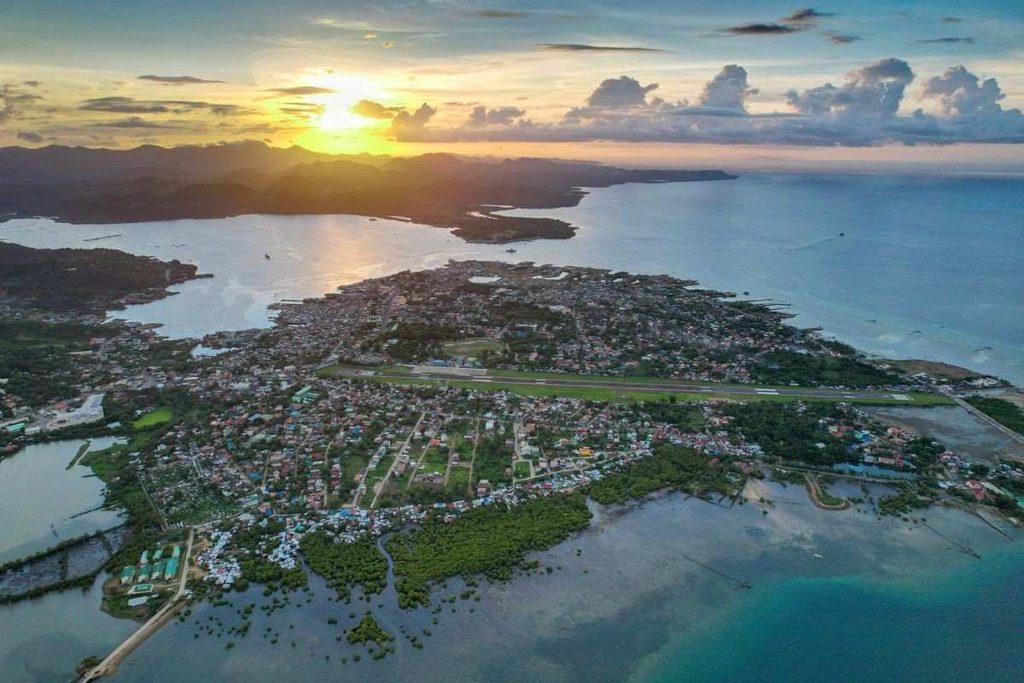
Haiti is a Caribbean country occupying the western portion of the island of Hispaniola. The Dominican Republic occupies the eastern part of the island.
Its capital is Port-au-Prince.
The United Nations records the English short name as Haiti and the formal name as the Republic of Haiti. In French, the country is Haïti, while its Haitian Creole endonym is Ayiti. Its ISO codes are HT and HTI.
Where Is Haiti?
Haiti is located in the Caribbean between the Caribbean Sea and the Atlantic Ocean.
Although Haiti shares an island with the Dominican Republic, the two are independent sovereign countries with different historical and linguistic traditions.
Haiti’s landscape is strongly mountainous, with valleys and coastal plains separating major ranges. Its location in the Caribbean also places it within a region exposed to earthquakes, tropical storms, and hurricanes.
A Short History of Haiti
Haiti has one of the most significant independence histories in the Americas.
Before independence, the western part of Hispaniola was the French colony of Saint-Domingue. Beginning in 1791, a major uprising developed into the Haitian Revolution.
After years of warfare, Haiti declared its independence from France on January 1, 1804.
UNESCO describes Haiti’s independence as the outcome of a prolonged struggle by enslaved people against colonial rule and notes the historic importance of the monuments later constructed to defend the new state.
Haiti was already an independent republic more than a century before the United Nations was established.
It became a UN member on October 24, 1945.
Haiti’s UNESCO World Heritage Site
As of 2026, Haiti has one property on the UNESCO World Heritage List:
National History Park – Citadel, Sans Souci, Ramiers
The property was inscribed in 1982.
UNESCO describes its monuments as powerful symbols of liberty associated directly with the birth of independent Haiti.
The Citadelle Henry is particularly striking. Built high in the mountains of northern Haiti, it was intended to help defend the newly independent state against the possibility of foreign invasion.
2. Honduras
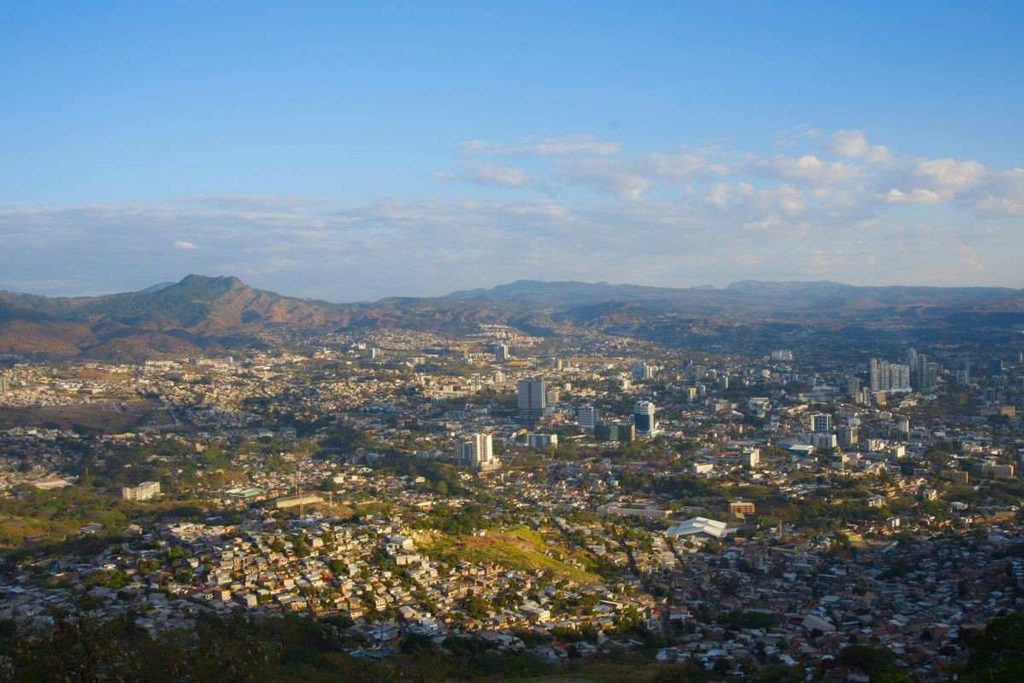
Honduras is a country in Central America.
Its capital is Tegucigalpa, and its standard English formal name is the Republic of Honduras.
United Nations geographical records place Honduras in Central America and assign it the ISO codes HN and HND.
Where Is Honduras?
Honduras lies between Guatemala, El Salvador, and Nicaragua.
It has an extensive Caribbean coastline to the north and a much shorter Pacific outlet through the Gulf of Fonseca in the south.
The country’s geography ranges from Caribbean coastal lowlands to forested mountains and interior valleys.
This combination of mountains, tropical forests, coastlines, and archaeological landscapes gives Honduras a particularly diverse physical geography.
A Short History of Honduras
Long before the creation of modern Honduras, parts of its present territory were connected with major Indigenous civilizations.
The best-known archaeological example is Copán.
UNESCO describes Copán as one of the most important sites of Maya civilization.
Evidence of settlement in the Copán Valley reaches back to around 1500 BCE, while the city’s great period occurred during the Classic Maya era.
The dynasty traditionally associated with Copán began with Yax K’uk’ Mo’ in the fifth century CE, and the city later became an important political, ceremonial, and intellectual center.
Centuries later, the territory came under Spanish colonial rule.
Honduras gained independence from Spain in 1821 and subsequently became part of the Federation of Central American States. After the federation broke apart during the 1830s, Honduras developed as a separate independent republic.
Honduras joined the United Nations on December 17, 1945.
Honduras’s UNESCO World Heritage Sites
Honduras currently has two UNESCO World Heritage properties.
| Property | Type | Inscribed |
|---|---|---|
| Maya Site of Copán | Cultural | 1980 |
| Río Plátano Biosphere Reserve | Natural | 1982 |
Maya Site of Copán
Copán contains monumental plazas, temples, carved stelae, altars, a ball court, and the famous Hieroglyphic Stairway.
The surviving structures document several phases of Maya political and cultural development before the city declined and was abandoned in the early 10th century.
Río Plátano Biosphere Reserve
The Río Plátano Biosphere Reserve protects a vast tropical landscape in northeastern Honduras.
UNESCO describes it as one of the remaining major tropical rainforest areas in Central America, extending from mountainous headwaters toward the Caribbean coast.
The reserve contains exceptionally diverse ecosystems and wildlife and remains on the List of World Heritage in Danger in 2026.
3. Hungary
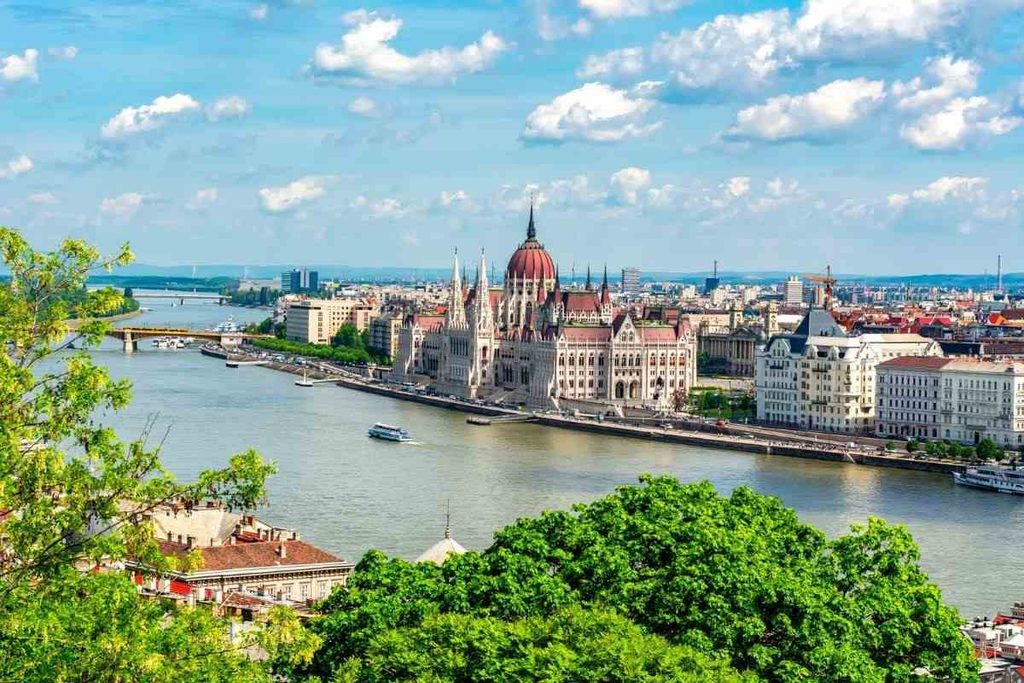
Hungary is a landlocked country in Europe with Budapest as its capital.
Its Hungarian name is Magyarország.
UN geographical records assign Hungary the ISO codes HU and HUN. The UN M49 system places Hungary in its Eastern Europe statistical subregion, although Hungary is also widely described geographically and culturally as part of Central Europe.
Where Is Hungary?
Hungary lies in the Carpathian Basin.
It borders Austria, Slovakia, Ukraine, Romania, Serbia, Croatia, and Slovenia.
Unlike Haiti and Honduras, Hungary has no coastline.
Two of its most important geographic features are the Danube River and the Tisza River. The Danube passes directly through Budapest and has played a major role in the development of the capital.
Hungary is also known for the Great Hungarian Plain and Lake Balaton, one of Central Europe’s best-known large lakes.
A Short History of Hungary
Hungarian history extends back more than a thousand years.
Hungarian groups entered the Carpathian Basin around the end of the ninth century under leaders associated with Árpád.
Around the year 1000, Stephen I established the Christian Kingdom of Hungary.
Hungary later experienced major upheavals, including the Mongol invasion, Ottoman expansion, Habsburg rule, and the political transformations of the 19th century.
The 1867 Austro-Hungarian Compromise created the Austro-Hungarian Empire, in which Hungary became one of the dual monarchy’s two principal components.
That political structure ended after World War I.
Hungary’s 20th century was shaped by further territorial change, World War II, communist rule, and the 1956 Hungarian Revolution.
In October 1956, an uprising challenged Soviet domination. Soviet forces subsequently intervened and suppressed the revolution.
Hungary had joined the United Nations less than a year earlier, on December 14, 1955.
Hungary’s UNESCO World Heritage Sites
As of 2026, Hungary has eight UNESCO World Heritage properties.
Seven are cultural properties and one is natural.
They include:
- Budapest, including the Banks of the Danube, Buda Castle Quarter and Andrássy Avenue
- Old Village of Hollókő and its surroundings
- Millenary Benedictine Abbey of Pannonhalma
- Hortobágy National Park
- Tokaj Wine Region Historic Cultural Landscape
- Early Christian Necropolis of Pécs
- Fertő / Neusiedlersee Cultural Landscape
- Caves of Aggtelek Karst and Slovak Karst
UNESCO’s Hungary profile provides the current World Heritage list.
Budapest’s World Heritage property includes the Banks of the Danube, Buda Castle Quarter, and Andrássy Avenue.
UNESCO describes the capital as an outstanding urban landscape reflecting multiple historical periods. Buda developed on the hilly western bank of the Danube, while Pest expanded across the flatter eastern bank.
Haiti vs Honduras vs Hungary
Although all three countries begin with H, they have very little else in common geographically.
| Feature | Haiti | Honduras | Hungary |
|---|---|---|---|
| Capital | Port-au-Prince | Tegucigalpa | Budapest |
| Broad location | Caribbean | Central America | Europe |
| Island or mainland | Part of Hispaniola | Central American mainland | European mainland |
| Landlocked | No | No | Yes |
| ISO Alpha-3 | HTI | HND | HUN |
| UN admission | 1945 | 1945 | 1955 |
| UNESCO World Heritage properties | 1 | 2 | 8 |
Haiti and Honduras are both in the Americas, but Haiti is a Caribbean island country while Honduras occupies part of the Central American mainland.
Hungary is geographically separate from both and belongs to Europe.
This makes H an unusually varied letter for a group containing only three countries.
Does the Holy See Count as a Country That Starts With H?
This depends on the definition being used.
The Holy See is internationally recognized as a sovereign entity, but it is not a United Nations member state.
Instead, the Holy See is one of the UN’s current non-member observer states.
Therefore, in a standard question asking for UN member countries that start with H, the Holy See is not added to Haiti, Honduras, and Hungary.
Standard country-list answer: Haiti, Honduras, and Hungary are the three H countries.
Is Hong Kong a Country That Starts With H?
No.
Hong Kong is the Hong Kong Special Administrative Region of the People’s Republic of China.
Article 12 of Hong Kong’s Basic Law states that the HKSAR is a local administrative region of the People’s Republic of China under the authority of the Central People’s Government.
Hong Kong has a high degree of autonomy in many areas, but it is not a separate sovereign UN member state.
It should therefore not be included in a current list of countries beginning with H.
Is Holland a Country That Starts With H?
No.
Holland is not the official name of an independent country.
The sovereign state normally intended when people use the term Holland is the Netherlands.
Therefore, the Netherlands belongs under N, not H.
Are Haiti and Honduras in the Same Region?
Not exactly.
Both are in the Americas, but the United Nations places them in different subregions.
Haiti is classified in the Caribbean, while Honduras is classified in Central America.
That difference matters when organizing countries geographically rather than alphabetically.
Is Hungary in Central Europe or Eastern Europe?
Both descriptions can appear, depending on the classification system.
Hungary is commonly described geographically and historically as a Central European country.
However, the United Nations M49 geographical classification groups Hungary within Eastern Europe for statistical purposes.
These descriptions use different regional frameworks rather than necessarily representing a contradiction.
What Country Starting With H Is in the Caribbean?
Haiti is the only H country in the Caribbean.
It occupies the western part of Hispaniola, while the Dominican Republic occupies the eastern portion.
What Country Starting With H Is in Central America?
Honduras is the H country located in Central America.
Its neighbors include Guatemala, El Salvador, and Nicaragua.
What Country Starting With H Is in Europe?
Hungary is the only country beginning with H in Europe.
It is landlocked and has Budapest as its capital.
Are There Any Countries Ending With H?
Yes.
Bangladesh is a clear example of a current sovereign country whose English name ends with the letter H.
That makes H much rarer at the beginning of country names than many more common letters.
Frequently Asked Questions About Countries That Start With H
There are three UN member countries beginning with H: Haiti, Honduras, and Hungary.
They are Haiti, Honduras, and Hungary.
Haiti’s capital is Port-au-Prince, Honduras’s capital is Tegucigalpa, and Hungary’s capital is Budapest.
Yes. Haiti is an independent sovereign country in the Caribbean and a United Nations member state.
Yes. Honduras is an independent country in Central America.
Yes. Hungary is a sovereign landlocked country in Europe.
No. Hong Kong is a Special Administrative Region of China, not a separate sovereign UN member state.
The Holy See is a sovereign entity with non-member observer status at the United Nations. It is therefore relevant in broader sovereignty discussions, but it is not included when counting UN member states that begin with H.
No. Holland is commonly used informally for the Netherlands, but the sovereign country is the Netherlands.
Among Haiti, Honduras, and Hungary, Hungary has the most, with eight World Heritage properties as of 2026. Honduras has two and Haiti has one.
Last Words
There are three current sovereign United Nations member states whose standard English names start with H: Haiti, Honduras, and Hungary.
Haiti is a Caribbean nation whose 1804 independence followed the Haitian Revolution. Honduras is a Central American country with deep Maya heritage represented by Copán. Hungary is a landlocked European country with more than a thousand years of state history and Budapest as its capital.
Several other familiar names beginning with H can cause confusion. Hong Kong is a Special Administrative Region of China, Holland is not the official name of a sovereign country, and the Holy See is a sovereign entity with UN observer status rather than full UN membership.
In one sentence: Haiti, Honduras, and Hungary are the three current UN member countries whose standard English names begin with H.
Country names, regional classifications, UN membership information, and World Heritage information were reviewed against United Nations and UNESCO sources in October 2026.