
If you are looking for countries that start with F, there are exactly three sovereign United Nations member states whose standard English names begin with the letter F:
- Fiji
- Finland
- France
These three countries are spread across very different parts of the world. Fiji is a Pacific island country in Melanesia, Finland is a Nordic country in Northern Europe, and France is a Western European country whose national territory also extends overseas.
The United Nations Member States directory lists Fiji, Finland, and France as the three sovereign states under the letter F.
Quick Answer: There are three countries that start with F: Fiji, Finland, and France.
How Many Countries Start With F?
There are 3 sovereign countries beginning with F when current United Nations member states are organized by their standard English names.
| # | Country | Capital | UN Region | ISO Codes |
|---|---|---|---|---|
| 1 | Fiji | Suva | Melanesia | FJ / FJI |
| 2 | Finland | Helsinki | Northern Europe | FI / FIN |
| 3 | France | Paris | Western Europe | FR / FRA |
The United Nations geographical names database places Fiji in Oceania and Melanesia. Finland is classified in Northern Europe, while France is classified in Western Europe.
So the complete modern answer is straightforward:
Fiji, Finland, and France.
Countries That Start With F by Region
The three F countries are divided between Europe and Oceania.
| Region | Number | Countries |
|---|---|---|
| Europe | 2 | Finland, France |
| Oceania | 1 | Fiji |
| Africa | 0 | None |
| Asia | 0 | None |
| Americas | 0 | None |
Finland and France are both European countries, but they belong to different geographic regions. Finland is in Northern Europe, while France is in Western Europe.
Fiji lies thousands of kilometers away in Melanesia, a region of Oceania.
How Does F Compare With Other Country Letters?
With three sovereign countries, F is an uncommon but not exceptionally rare starting letter.
It has the same number of countries as J, where Jamaica, Japan, and Jordan form the complete group.
Some letters produce even shorter answers. Oman is the only sovereign country represented under O, while Qatar stands alone under Q.
At the opposite extreme, the E group contains eight current sovereign countries.
Alphabetical geography can also become surprisingly complicated. Different official naming conventions affect the D list, while W produces no sovereign UN member state at all.
For F, however, there is little ambiguity in the main list:
Fiji, Finland, and France are the three sovereign countries.
1. Fiji
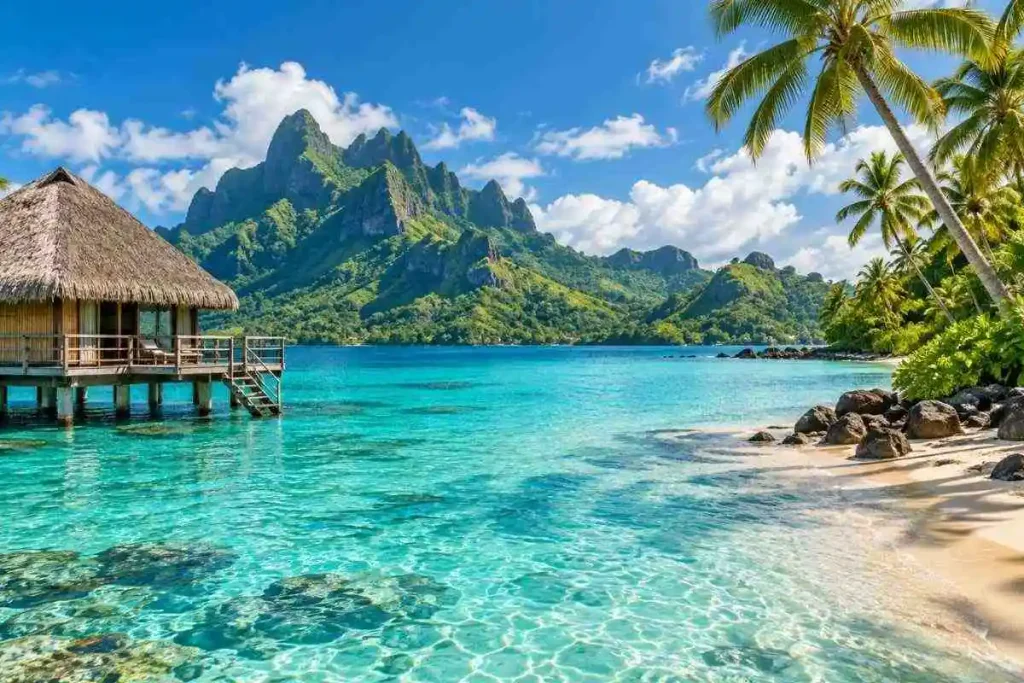
Fiji is an island country in the South Pacific Ocean.
Its capital is Suva, and its ISO country codes are FJ and FJI.
The United Nations geographical names system classifies Fiji within Oceania and more specifically within Melanesia. It also recognizes Viti as the Fijian-language short name for the country.
Quick Facts About Fiji
| Fact | Fiji |
|---|---|
| Capital | Suva |
| Region | Oceania / Melanesia |
| Fijian name | Viti |
| ISO Alpha-2 | FJ |
| ISO Alpha-3 | FJI |
| Independence | October 10, 1970 |
| UN membership | October 13, 1970 |
| UNESCO World Heritage properties | 1 |
Where Is Fiji?
Fiji lies in the South Pacific Ocean, east of Vanuatu, southwest of Samoa, and north of New Zealand.
Rather than consisting of one island, Fiji is an archipelagic country made up of many islands and smaller islets.
The two largest islands are:
- Viti Levu
- Vanua Levu
Viti Levu is the largest island and is home to Suva.
Fiji’s landscapes include:
- volcanic mountains
- tropical forests
- coral reefs
- mangroves
- beaches
- river valleys
- coastal plains
- small offshore islands
Why Is Fiji Also Called Viti?
The Indigenous Fijian name for Fiji is Viti.
The modern English name developed through historical interaction between Fijians, Tongans, and European visitors.
Today the standardized English short name is Fiji, while Viti continues to be used in the Fijian language.
A Short History of Fiji
People have lived in the Fiji Islands for thousands of years.
Archaeological evidence connected with the wider Lapita cultural tradition indicates that people had settled parts of Fiji roughly 3,000 years ago.
Over succeeding centuries, communities developed distinctive political structures, languages, cultural traditions, and maritime links with other Pacific islands.
European explorers began visiting the region during the early modern period, while European commercial and missionary activity expanded much more strongly during the 19th century.
Fiji and British Colonial Rule
During the 19th century, political rivalry, warfare, trade, missionary activity, and foreign settlement increasingly affected Fiji.
In 1874, Fiji was formally ceded to Britain.
Levuka became the first colonial capital.
UNESCO’s Levuka profile explains that the settlement developed as an important commercial port and became Fiji’s first colonial capital after the islands were ceded to Britain.
The capital was later transferred to Suva in 1882.
When Did Fiji Become Independent?
Fiji became independent from Britain on October 10, 1970.
The Government of Fiji commemorates October 10 as Fiji Day and identifies the date as the anniversary of independence.
Fiji joined the United Nations on October 13, 1970.
Fiji’s UNESCO World Heritage Site
As of 2026, Fiji has one UNESCO World Heritage property:
Levuka Historical Port Town.
The property was inscribed in 2013.
Levuka Historical Port Town
Levuka is located on the island of Ovalau.
The town developed from the 1820s as an increasingly important Pacific commercial settlement and became Fiji’s first colonial capital after the islands were ceded to Britain in 1874.
Its surviving townscape reflects interaction between Indigenous Pacific settlement patterns and European colonial development.
Fiji also has several properties on the UNESCO Tentative List, including Sovi Basin, Sigatoka Sand Dunes, and Yaduataba Crested Iguana Sanctuary.
2. Finland
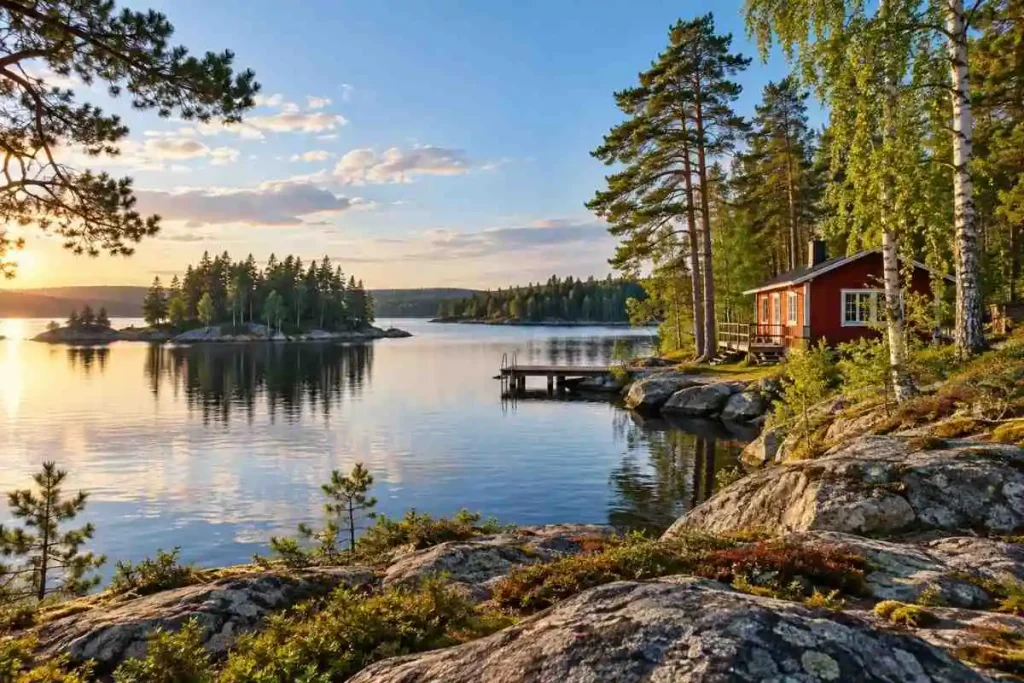
Finland is a Nordic country in Northern Europe.
Its capital is Helsinki, and its ISO codes are FI and FIN.
The United Nations geographical names database gives its formal English name as the Republic of Finland and classifies it within Northern Europe.
Quick Facts About Finland
| Fact | Finland |
|---|---|
| Capital | Helsinki |
| Region | Northern Europe |
| Finnish name | Suomi |
| Swedish name | Finland |
| ISO Alpha-2 | FI |
| ISO Alpha-3 | FIN |
| Independence | December 6, 1917 |
| UN membership | December 14, 1955 |
| UNESCO World Heritage properties | 8 |
What Is Finland Called in Finnish?
Finland is called Suomi in Finnish.
Finland has two national languages, Finnish and Swedish.
- Finnish: Suomi
- Swedish: Finland
The exact ancient origin of the word Suomi remains uncertain, so overly simple explanations of its origin should be treated cautiously.
Where Is Finland?
Finland is located in Northern Europe.
It borders:
- Sweden
- Norway
- Russia
To the south and west, Finland meets the Baltic Sea.
Its geography is strongly associated with forests, lakes, islands, wetlands, and the northern wilderness of Lapland.
Why Is Finland Called the Land of a Thousand Lakes?
The nickname dramatically understates the actual number.
Official Finnish information sources commonly count approximately 188,000 lakes in Finland.
The country is also heavily forested, with roughly three-quarters of its land area covered by forest.
Its huge network of lakes and forests has influenced:
- settlement
- transportation
- recreation
- wildlife
- tourism
- national identity
- summer cottage culture
A Short History of Finland
Human settlement in the area of present-day Finland goes back thousands of years.
Over many centuries, the region became increasingly connected politically and culturally with Sweden.
Finland remained part of the Swedish realm for centuries before the geopolitical balance changed during the Napoleonic era.
Finland Under the Russian Empire
In 1809, Finland became an autonomous Grand Duchy within the Russian Empire.
Despite being under Russian sovereignty, Finland retained and developed distinct institutions.
During the 19th century, Finnish nationalism and cultural identity strengthened, while the Finnish language became increasingly prominent in public life.
When Did Finland Become Independent?
Finland declared independence in 1917, during the upheaval surrounding the Russian Revolution.
On December 6, 1917, the Finnish Parliament approved the declaration of independence.
The official This is Finland history overview identifies December 6 as the date Finland became independent.
December 6 is therefore celebrated as Finland’s Independence Day.
Finland During World War II
Finland fought the Soviet Union during the Winter War of 1939–1940 and again during the Continuation War.
The country remained independent, although the conflicts brought major territorial, political, and human consequences.
After the war, Finland developed into a Nordic parliamentary democracy with a strong welfare state and increasingly close relationships with its European neighbors.
When Did Finland Join the United Nations?
Finland joined the United Nations on December 14, 1955.
Finland’s UNESCO World Heritage Sites
As of 2026, Finland has eight UNESCO World Heritage properties.
This is a recent increase.
Finland had seven sites before Aalto Works was added to the World Heritage List in 2026.
The current UNESCO profile for Finland lists:
- Fortress of Suomenlinna
- Old Rauma
- Petäjävesi Old Church
- Verla Groundwood and Board Mill
- Bronze Age Burial Site of Sammallahdenmäki
- Struve Geodetic Arc
- High Coast / Kvarken Archipelago
- Aalto Works
Aalto Works
Aalto Works became Finland’s eighth World Heritage property in 2026.
The serial property consists of 13 buildings and building ensembles associated with Alvar Aalto, Aino Marsio-Aalto, Elissa Aalto, and their collaborators.
The group includes buildings such as:
- Paimio Sanatorium
- Finlandia Hall
- Aalto House
- Säynätsalo Town Hall
- Villa Mairea
- Church of the Three Crosses
3. France
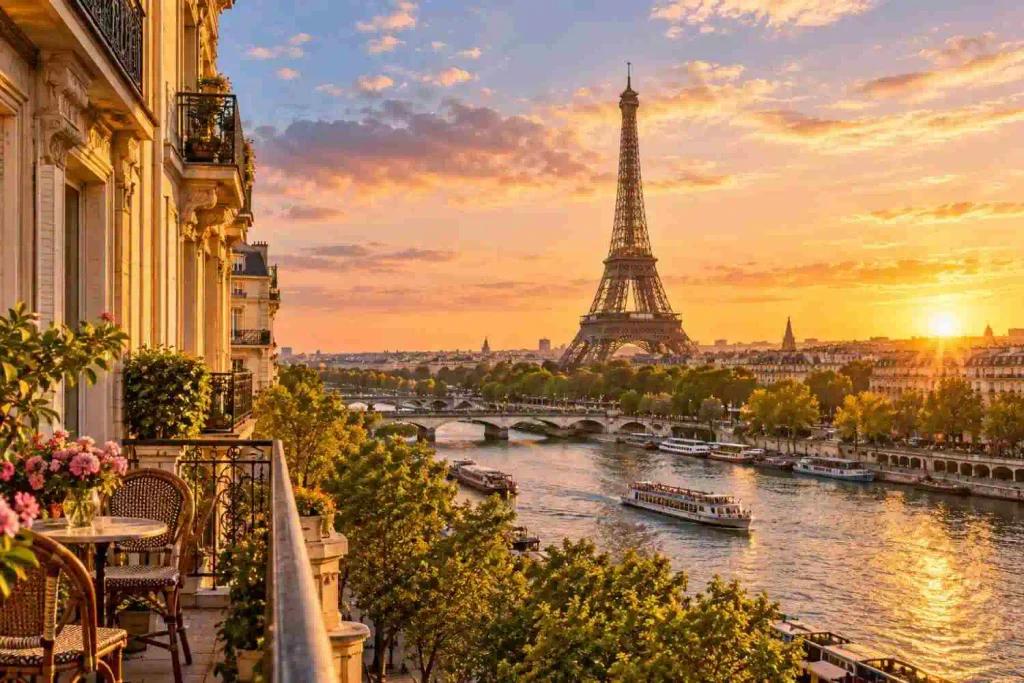
France is a sovereign country centered in Western Europe.
Its capital is Paris, and its ISO codes are FR and FRA.
The United Nations geographical names database records its formal English name as the French Republic and classifies France within Western Europe.
Quick Facts About France
| Fact | France |
|---|---|
| Official name | French Republic |
| Capital | Paris |
| Region | Western Europe |
| Official language | French |
| ISO Alpha-2 | FR |
| ISO Alpha-3 | FRA |
| UN membership | October 24, 1945 |
| UNESCO World Heritage properties | 56 |
Where Is France?
Metropolitan France lies in Western Europe.
It borders:
- Belgium
- Luxembourg
- Germany
- Switzerland
- Italy
- Monaco
- Spain
- Andorra
It also has coastlines on the Atlantic Ocean, English Channel, and Mediterranean Sea.
However, France is geographically more extensive than its European mainland alone.
French territories are located in the:
- Caribbean
- South America
- Indian Ocean
- Pacific Ocean
- Southern Ocean region
The French Ministry for the Overseas Territories provides information on France’s overseas territories and collectivities.
Why Is France Called France?
The country’s name is ultimately associated with the Franks, a Germanic people who became politically dominant in parts of Western Europe after the decline of Roman authority.
Over centuries, the political entities ruled by Frankish dynasties developed through changing kingdoms and territorial arrangements into the state now known as France.
A Short History of France
The territory of modern France has a long human history.
In antiquity, much of the region was known as Gaul and was inhabited by Celtic-speaking peoples and other communities.
Roman conquest incorporated Gaul into the Roman world.
Following the decline of Roman authority in Western Europe, the Franks emerged as an increasingly powerful political force.
Frankish dynasties, including the Merovingians and Carolingians, played a major role in medieval European history.
Medieval and Early Modern France
France became one of Europe’s major medieval kingdoms.
Its history during this period included:
- the Hundred Years’ War
- expansion of royal authority
- religious conflicts
- Renaissance cultural change
- the reign of Louis XIV
- the rise of Versailles as a political center
By the 18th century, France was one of Europe’s most powerful states but faced deep political, financial, and social pressures.
The French Revolution
The French Revolution began in 1789 and fundamentally transformed the country’s political system.
On July 14, 1789, crowds in Paris captured the Bastille, an event that became one of the Revolution’s most recognizable symbols.
The official Élysée history of Bastille Day explains the historical importance of July 14.
Another landmark document followed that summer.
The Declaration of the Rights of Man and of the Citizen was adopted in August 1789 and articulated principles involving liberty, equality before the law, political representation, and fundamental rights.
France From Empire to Republic
France’s political structure changed repeatedly after the Revolution.
The country experienced:
- republics
- Napoleon’s empire
- restored monarchies
- a second empire
- additional republican systems
Modern France operates under the Fifth Republic, whose constitution dates from October 4, 1958.
The French Constitution describes France as an indivisible, secular, democratic, and social republic.
France and the United Nations
France was one of the original members of the United Nations.
Its membership dates from October 24, 1945.
France is also one of the five permanent members of the United Nations Security Council.
France’s UNESCO World Heritage Sites
As of 2026, France has 56 UNESCO World Heritage properties.
The current UNESCO profile for France reflects this total.
The number increased in 2026 with the inscription of:
Beaches of the D-Day Landings, Normandy, 1944.
The property includes:
- Utah Beach
- Omaha Beach
- Gold Beach
- Juno Beach
- Sword Beach
- Pointe du Hoc
These sites are associated with the Allied landings of June 6, 1944 and the opening phase of Operation Overlord.
Other famous French World Heritage properties include:
- Palace and Park of Versailles
- Mont-Saint-Michel and its Bay
- Chartres Cathedral
- Palace and Park of Fontainebleau
- Banks of the Seine in Paris
- Bordeaux
- Historic Centre of Avignon
- Pont du Gard
- Gulf of Porto in Corsica
Fiji vs Finland vs France
Although their English names all begin with F, Fiji, Finland, and France are geographically and historically very different.
| Feature | Fiji | Finland | France |
|---|---|---|---|
| Region | Melanesia | Northern Europe | Western Europe |
| Capital | Suva | Helsinki | Paris |
| Geography | Pacific archipelago | Forests, lakes and Baltic coast | European mainland plus overseas territories |
| ISO3 | FJI | FIN | FRA |
| Independence / state milestone | 1970 | 1917 | Long-established state |
| UN admission | 1970 | 1955 | 1945 |
| UNESCO properties in 2026 | 1 | 8 | 56 |
Which Countries Starting With F Are in Europe?
There are two sovereign European countries beginning with F:
- Finland
- France
Finland is in Northern Europe, while France is in Western Europe.
Which F Country Is in Oceania?
Fiji is the only sovereign country beginning with F located in Oceania.
More specifically, it is part of Melanesia.
Which F Countries Are Island Countries?
Fiji is an island country consisting of a Pacific archipelago.
Finland and France are not normally classified as island countries, although both contain many islands.
Finland has an extensive Baltic archipelago, while France includes islands and overseas territories around the world.
Which F Country Has the Most UNESCO World Heritage Sites?
France has by far the most.
| Country | UNESCO World Heritage Properties in 2026 |
|---|---|
| France | 56 |
| Finland | 8 |
| Fiji | 1 |
Both France and Finland gained new World Heritage inscriptions in 2026, which means older geography pages may show lower totals.
Is French Guiana a Country That Starts With F?
No. French Guiana is not an independent sovereign country.
French Guiana lies on the northeastern coast of South America between Brazil and Suriname.
It forms part of France.
The French overseas administration identifies Guyane as a French territorial collectivity exercising departmental and regional responsibilities.
Key distinction: France has sovereign national territory in South America, but French Guiana is not a separate sovereign state.
Is French Polynesia a Country?
French Polynesia is not an independent sovereign UN member state.
It is an overseas collectivity within the French Republic with extensive internal autonomy.
Therefore, it should not be added as a fourth sovereign F country.
Are the Faroe Islands a Country?
The Faroe Islands have extensive self-government, but they are not a separate sovereign United Nations member state.
The Government of the Faroe Islands describes the islands as a self-governing community within the Danish Kingdom.
So the Faroe Islands may appear in broad geographic directories, but they do not increase the number of sovereign countries beginning with F.
Does the Federated States of Micronesia Count Under F?
This is one of the more interesting alphabetical questions involving F.
The country’s formal name is the Federated States of Micronesia.
However, the United Nations alphabetizes the state under:
Micronesia (Federated States of)
and therefore places it under M, not F.
Under the standard UN short-name system, the Federated States of Micronesia does not count as a fourth F country.
Other Places That Start With F but Are Not Sovereign Countries
| Place | What Is It? | Sovereign Country? |
|---|---|---|
| French Guiana | French territory in South America | No |
| French Polynesia | French overseas collectivity | No |
| Faroe Islands | Self-governing territory within the Danish Kingdom | No |
| Florida | U.S. state | No |
| Florence | Italian city | No |
| Frankfurt | German city | No |
Are There Any Countries Ending With F?
No current sovereign United Nations member state’s standard English short name ends with the letter F.
The letter appears more often at the beginning of geographic names than at the end of modern country names.
Which F Country Joined the United Nations First?
France joined first because it was one of the founding members of the United Nations.
| Country | UN Admission Date |
|---|---|
| France | October 24, 1945 |
| Finland | December 14, 1955 |
| Fiji | October 13, 1970 |
Frequently Asked Questions About Countries That Start With F
What countries start with the letter F?
There are three sovereign countries beginning with F: Fiji, Finland, and France.
How many countries start with F?
There are three countries that start with F using the standard English names of current United Nations member states.
What are the three countries starting with F?
They are Fiji, Finland, and France.
What are the capitals of the F countries?
- Fiji: Suva
- Finland: Helsinki
- France: Paris
Which F countries are in Europe?
Finland and France are in Europe. Finland is in Northern Europe, while France is in Western Europe.
Which F country is in Oceania?
Fiji is the only F country in Oceania.
Is French Guiana a country?
No. French Guiana forms part of France and is not an independent sovereign state.
Is French Polynesia a country?
French Polynesia has substantial autonomy but remains an overseas collectivity within the French Republic rather than an independent sovereign state.
Are the Faroe Islands a country?
The Faroe Islands are self-governing within the Danish Kingdom but are not a separate sovereign UN member state.
Does the Federated States of Micronesia count as an F country?
Not under the standard UN alphabetical system. The United Nations alphabetizes it as Micronesia (Federated States of) under M.
When did Fiji become independent?
Fiji became independent on October 10, 1970.
When did Finland become independent?
Finland declared independence on December 6, 1917.
Which F country has the most UNESCO World Heritage Sites?
France has the most, with 56 World Heritage properties as of 2026. Finland has eight, while Fiji has one.
Final Answer: Which Countries Start With F?
There are exactly three sovereign United Nations member states whose standard English names begin with F:
- Fiji
- Finland
- France
Fiji is a Pacific island country in Melanesia with Suva as its capital.
Finland is a Northern European country known for its vast forests, thousands of lakes, and capital city Helsinki.
France is a Western European country with Paris as its capital, although French sovereign territory also extends far beyond Europe through its overseas territories.
The three countries are also very different historically. Fiji became independent in 1970, Finland declared independence in 1917, while France developed through centuries of monarchy, revolution, empire, and republican government.
Their World Heritage totals differ dramatically as well. As of 2026, Fiji has one UNESCO World Heritage property, Finland has eight, and France has 56.
Names such as French Guiana, French Polynesia, and the Faroe Islands may appear in broader geographic lists beginning with F, but none is a separate sovereign UN member state. The Federated States of Micronesia also does not increase the F total because the United Nations alphabetizes it under Micronesia.
In one sentence: The three countries that start with F are Fiji, Finland, and France.
Country names, regional classifications, capitals, UN membership dates, and current heritage information were reviewed against United Nations, UNESCO, and official government sources in October 2026.

